Topic
Guides on: Getting Started

How Much Your Typing Speed Really Improves in a Week
Typing sites love round numbers like 30 WPM in two weeks, with no source behind any of them. Here's what motor-learning research and a 168,000-person keystroke dataset actually say about how much your typing speed improves in the first week.

Hunt-and-Peck Typing Cost: How Many Hours You Really Lose
Typing with two or four fingers while watching the keyboard has a real, calculable cost in hours a year - not just a vague sense that you're slower. Here's a transparent version of that hunt-and-peck typing cost calculation, and why a popular typing calculator gives you a different number.

Touch Typing Without Looking at the Keyboard: Why It's Hard
Most pages promise you'll stop looking at the keyboard in 2-4 weeks, with no source for that number anywhere. Here's the actual mechanism behind typing without looking, drawn from real keyboard research, and a realistic picture of how long it takes.
Is It Too Old to Learn Touch Typing at 40, 50, or 60?
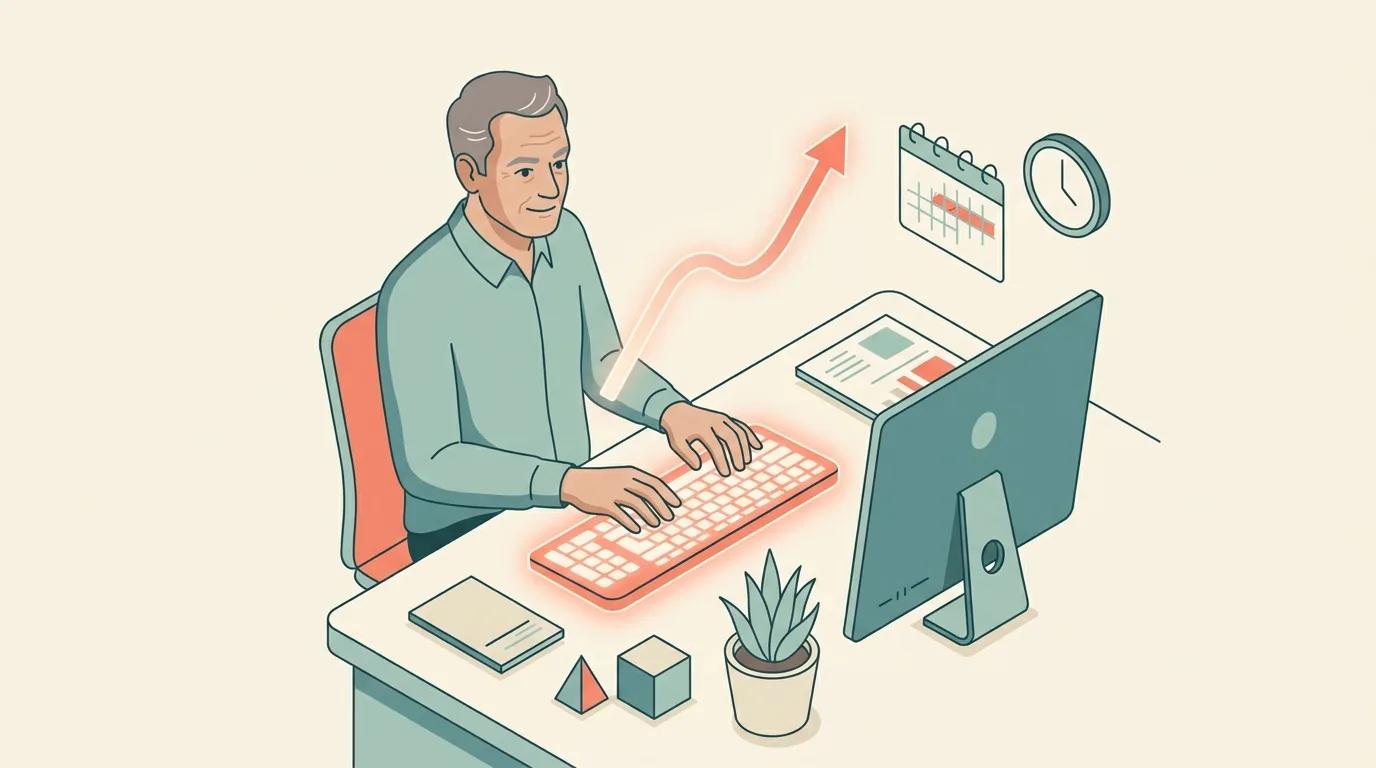
Is it too old to learn touch typing at 40, 50, or 60? A 10,613-person study shows speed does decline with age, but not the way most people assume. Here is the actual curve, and what to do about it starting today.

Can't Type Without Looking? Build Typing Skills Before Your First Job
Years of thumb-typing on a phone don't transfer to a keyboard - it's a separate skill on its own. Here's the honest timeline for building real typing skills before your first job, and what to do if you're already embarrassed to practice.
Touch Typing vs. Hunt-and-Peck: What 150+ WPM Really Proves
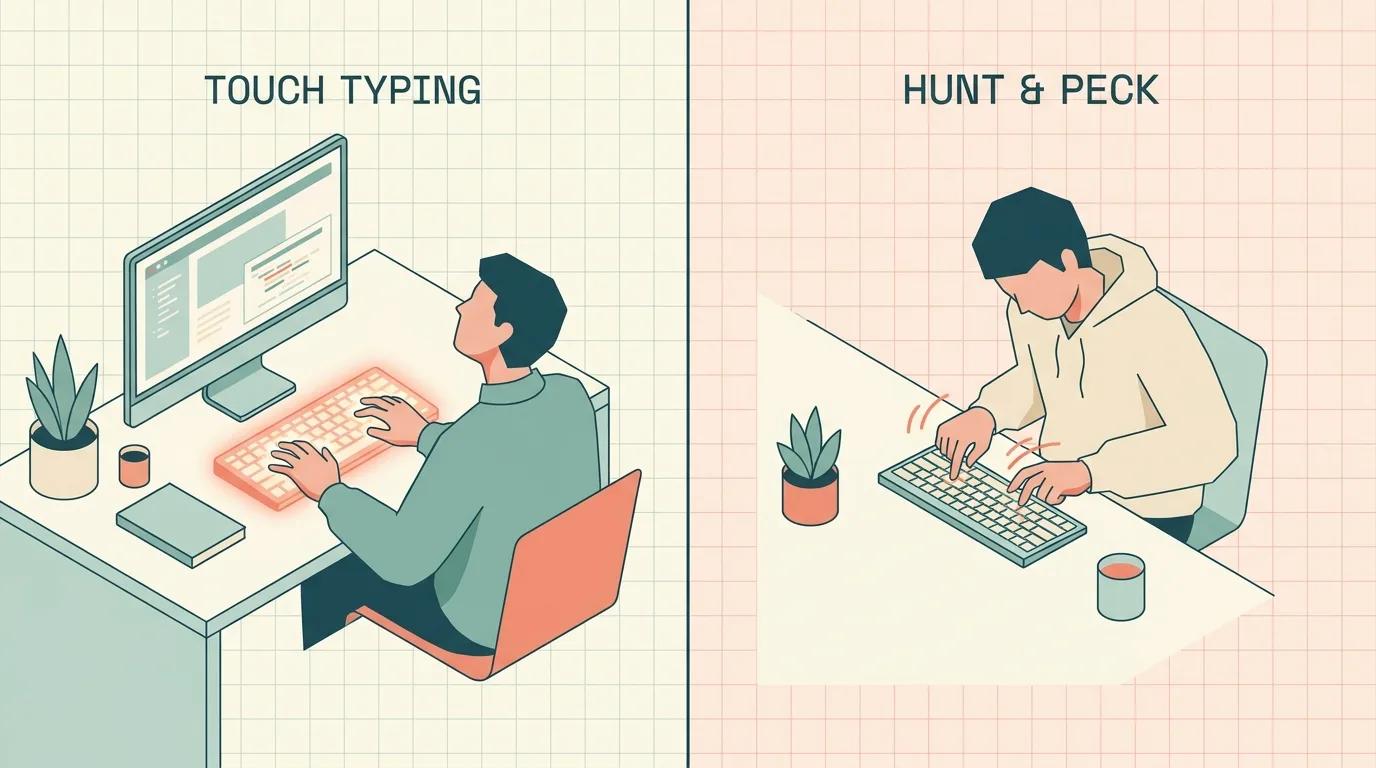
A two-finger typist just hit 151 WPM in a viral post, raising a fair question: why bother learning touch typing at all. Here's what a real 2016 Vanderbilt study found about speed and accuracy once the keyboard is out of view - and the specific point where hunt-and-peck quietly falls apart at work.