Tippen, ohne hinzusehen.
Nach Gefühl statt nach Blick. 5 Minuten am Tag, fingergeführte Lektionen und echtes Tempo, das du nächste Woche merkst.
Alles, was dich schnell macht
Jede Taste ist in der Farbe des Fingers markiert, der sie treffen soll - so entsteht das richtige Muskelgedächtnis ab der ersten Lektion.
Die Engine beobachtet deine schwachen Tasten und baut jede Lektion still um genau die herum, die dich ausbremsen.
Die Lektionen trainieren dich darauf, deinen Fingern zu vertrauen statt nach unten zu schauen - genau darum geht es bei TypeBlind.
WPM, Genauigkeit, Heatmaps pro Taste und ein Übungskalender - alles wird in deinem Profil über die Zeit verfolgt.
Schalte Meilensteine frei und halte deine tägliche Serie am Leben - kleine Erfolge, die fünf Minuten am Tag zur Gewohnheit machen.
Miss dich mit der weltweiten Rangliste über jedes Layout und jede Textart hinweg.
Tippen als Rennen, live.
Steig in ein Echtzeit-Rennen ein, hol dir deine eigene Startnummer und zieh mit jedem sauberen Anschlag davon. Jeder Tippfehler kostet Meter - Genauigkeit gewinnt Rennen.
Rennen beitreten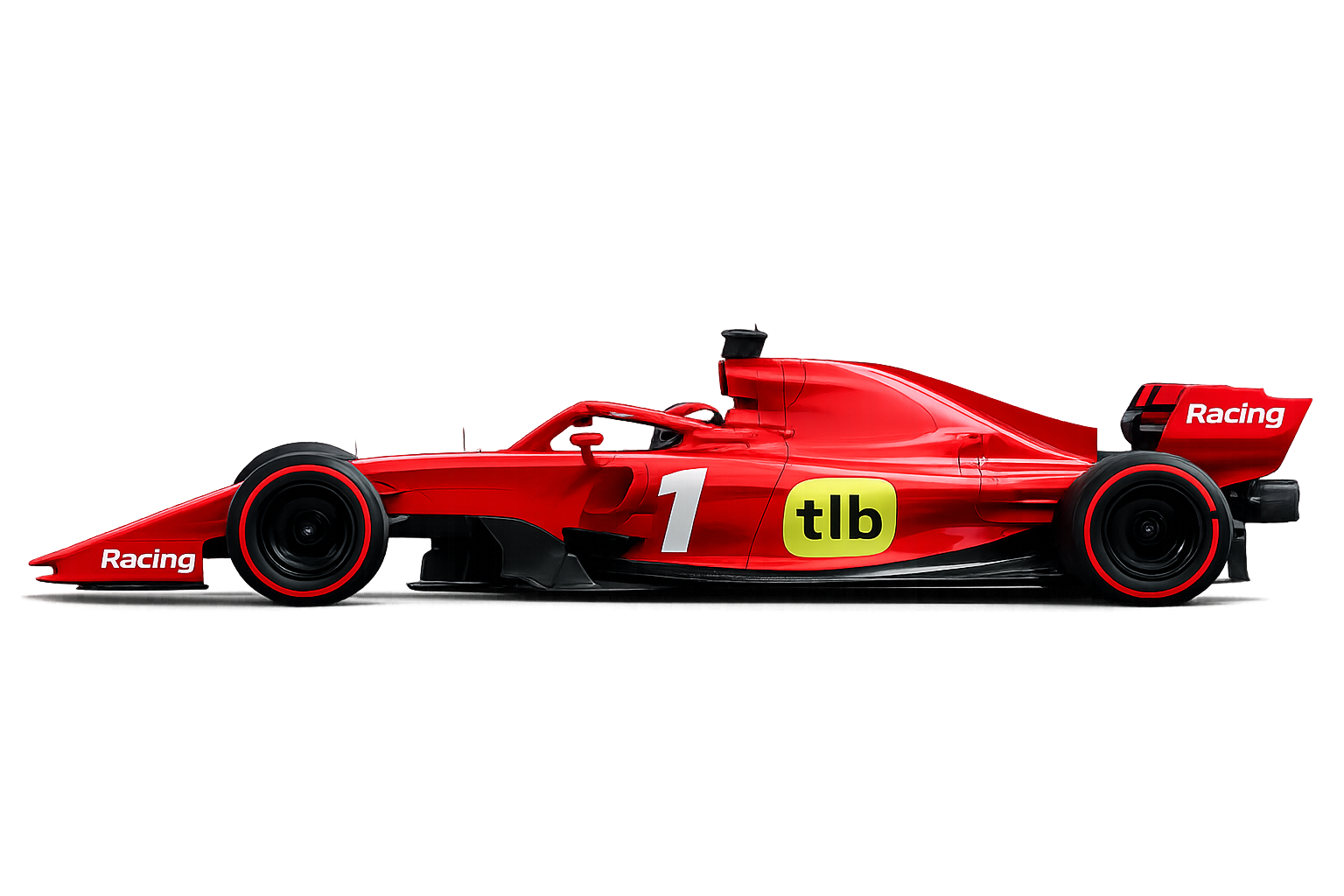
Schnell angefangen, schwer aufgehört
- 1Layout wählen
QWERTZ, Dvorak, Colemak und über 90 weitere, in 47 Sprachen. Bring dein eigenes mit oder entwirf ein neues.
- 2Fünf Minuten üben
Fingergeführte, adaptive Lektionen, die deine Schwachstellen treffen statt zu wiederholen, was du längst kannst.
- 3Rennen & Fortschritt
Fordere andere in Echtzeit heraus und sieh zu, wie Tempo, Genauigkeit und Serien Woche für Woche steigen.
Fundierte Ratgeber zum schnelleren Tippen
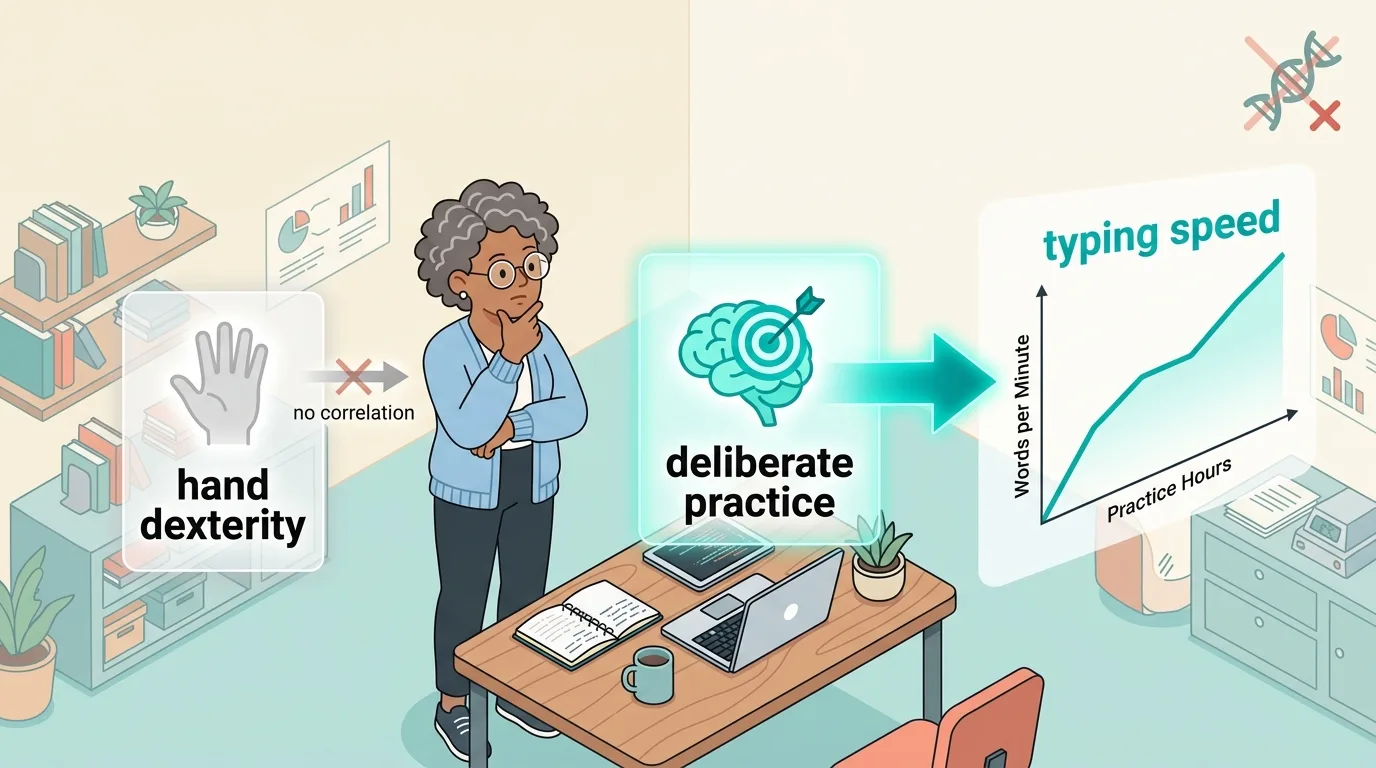 Is There Such a Thing as Natural Typing Talent?If you've ever watched someone type without even looking and assumed they were just born with it, two independent studies say otherwise. Here's what actually predicts typing speed - and it isn't your hands.
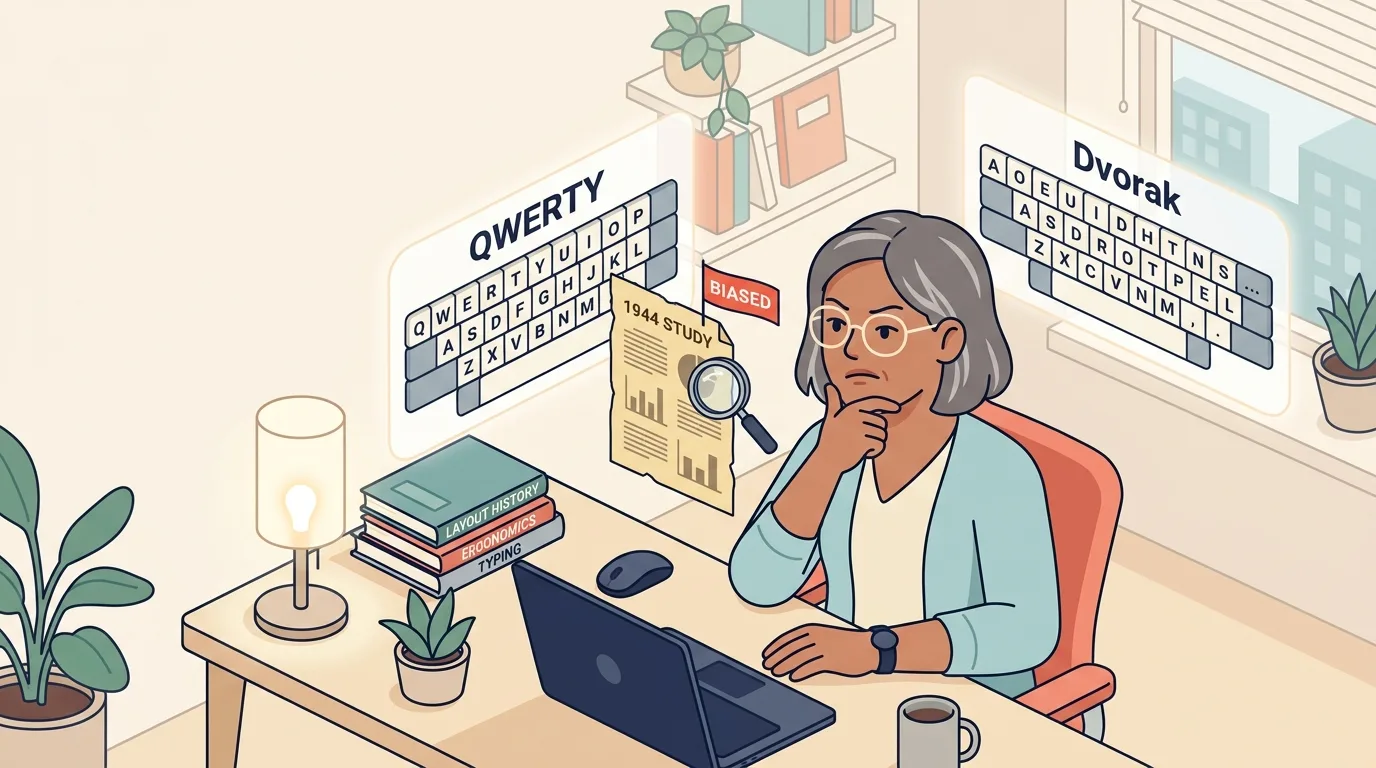 Dvorak vs QWERTY: Is Switching Worth It If You Already Type Fast?The claim that Dvorak types faster than QWERTY comes from a 1944 study run by the man who patented Dvorak. Here's what happened when an independent government study checked his math - and what real people who switched actually report.
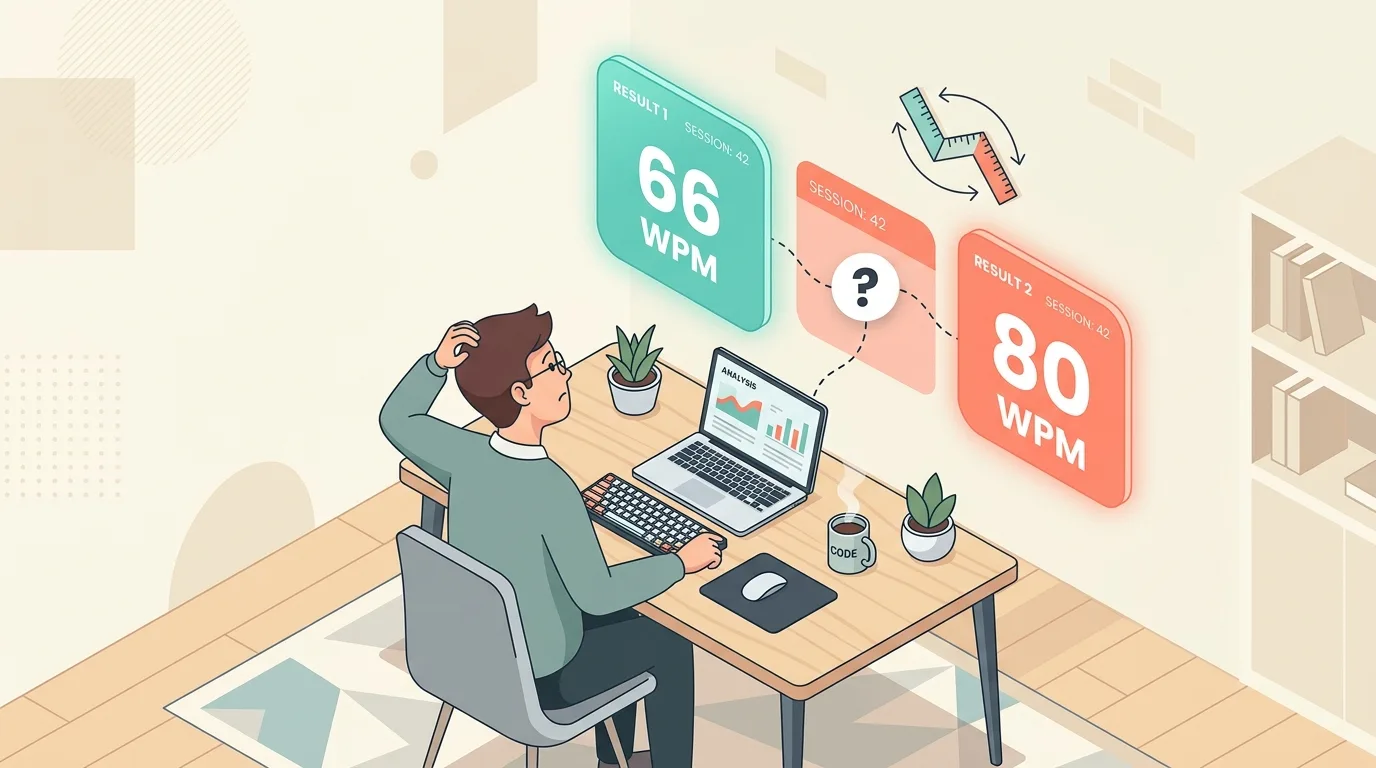 Why Your Typing Test Score Changes Every Time You Take OneScore 80 on one typing test and 60 on another? Your fingers didn't change - the math behind the number did. Here's what a typing test actually measures, why different sites disagree, and how to read your own score honestly.
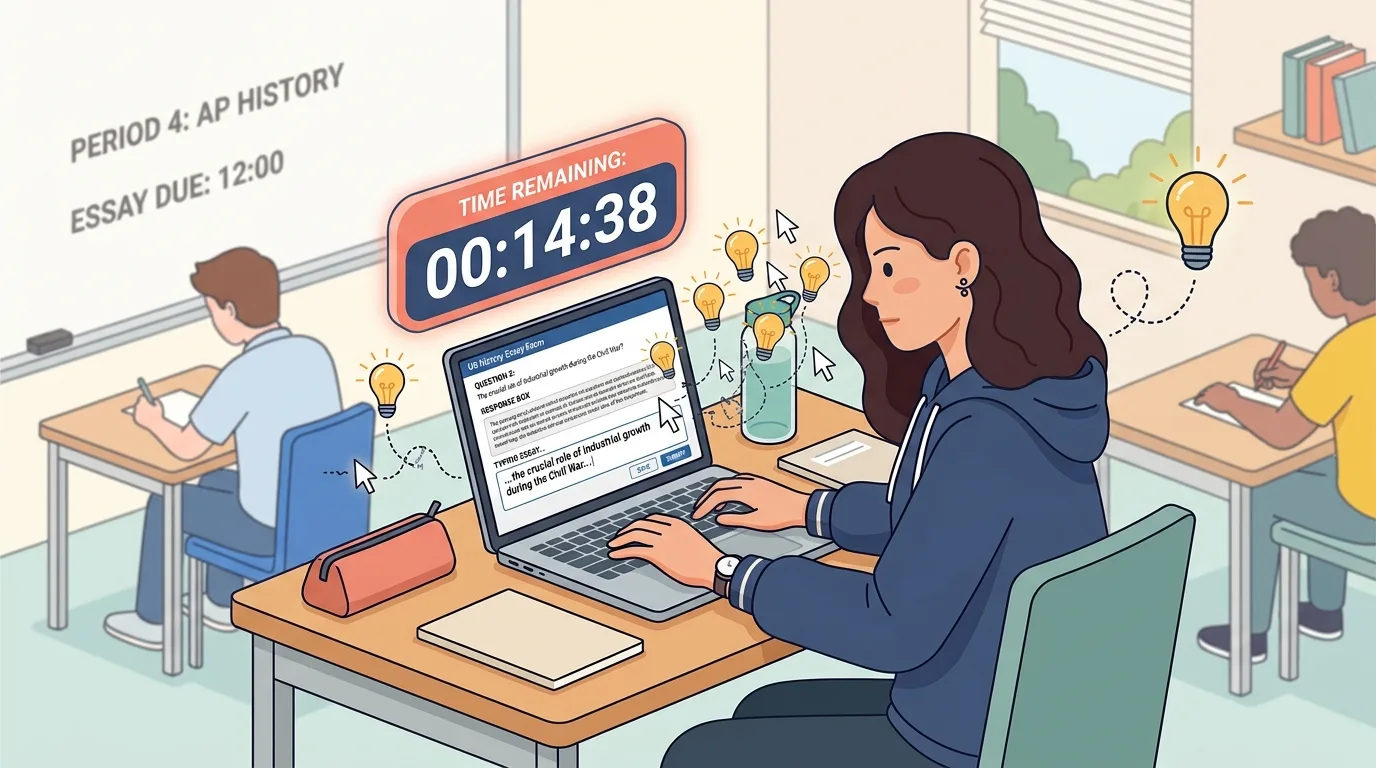 How Fast You Need to Type for Your 2026 AP Exam EssayMost AP exams are now typed, not handwritten, and the clock does not care how well you know the material. This guide walks through how much of your essay time actually goes to typing, how to work out your own target speed, and a practice plan for the weeks before exam day.
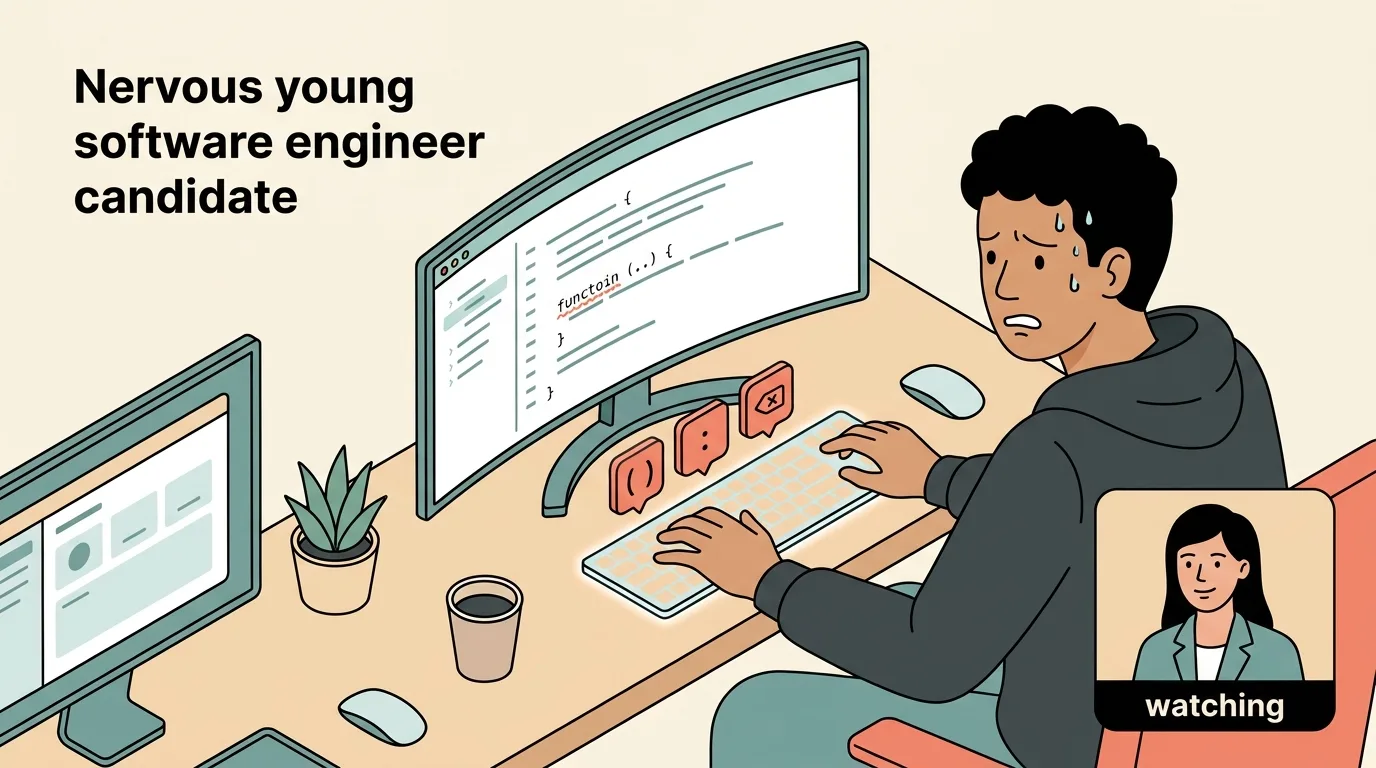 How to Practice Typing Before a Live Coding InterviewA typo during a live coding interview is not the same as a typo at your desk - someone is watching it happen, and it can end up in the replay. Here is what the research and mock-interview data actually say about typing and interview performance, and a realistic week of practice built around it.
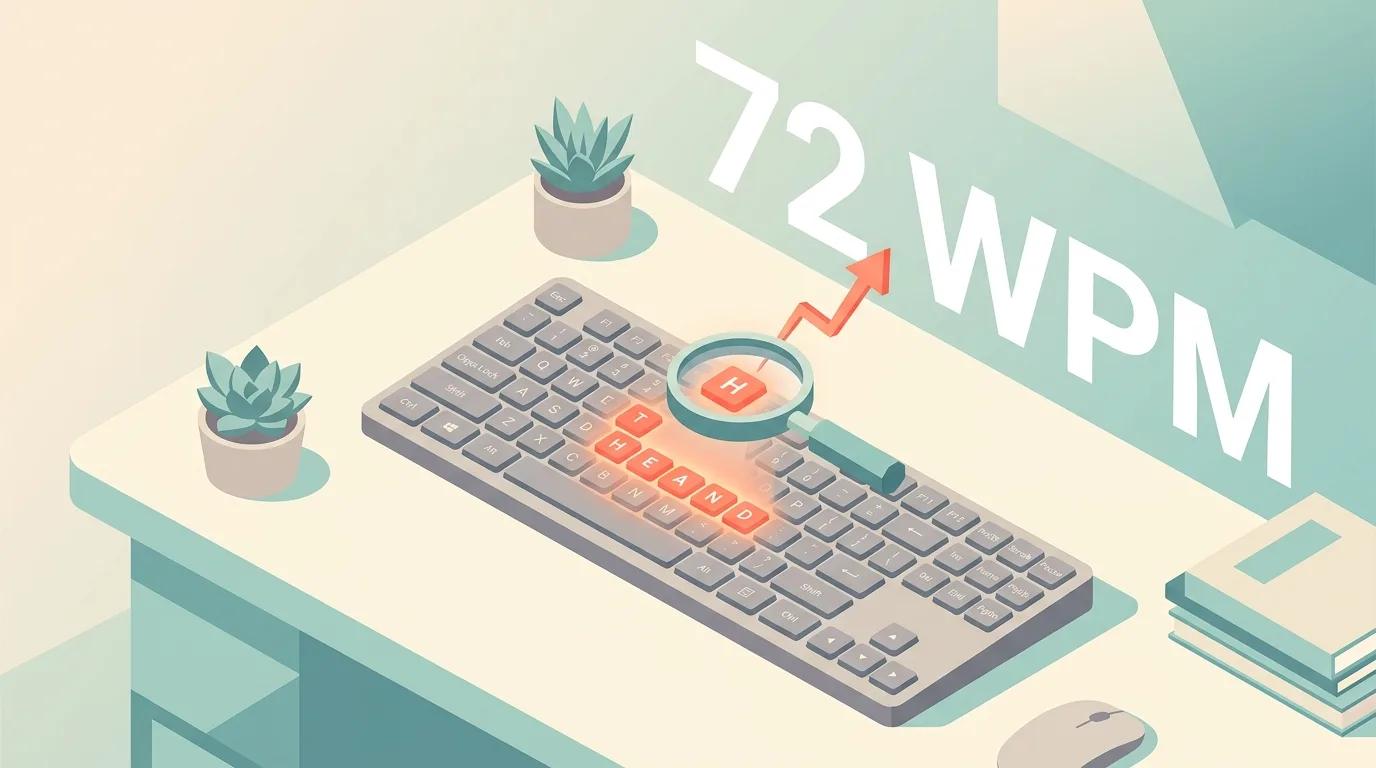 Why Fixing Your Weak Keys Beats More Typing PracticeMost people who quit typing practice are not lazy - their progress was invisible. Here is what the research actually says about why targeted practice on your own weak keys works when generic drills do not, and how to build a realistic first week around it.
 How Much Your Typing Speed Really Improves in a WeekTyping sites love round numbers like 30 WPM in two weeks, with no source behind any of them. Here's what motor-learning research and a 168,000-person keystroke dataset actually say about how much your typing speed improves in the first week.
 Hunt-and-Peck Typing Cost: How Many Hours You Really LoseTyping with two or four fingers while watching the keyboard has a real, calculable cost in hours a year - not just a vague sense that you're slower. Here's a transparent version of that hunt-and-peck typing cost calculation, and why a popular typing calculator gives you a different number.
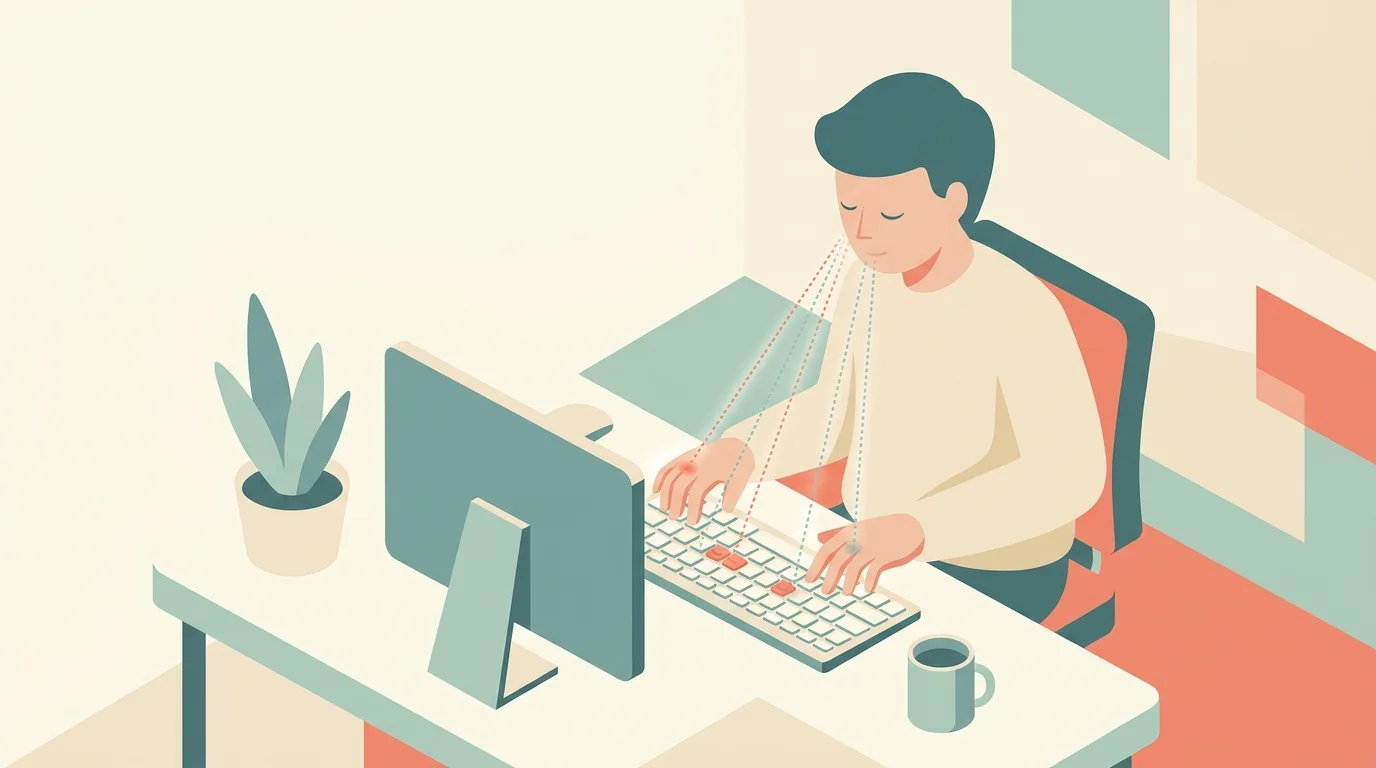 Touch Typing Without Looking at the Keyboard: Why It's HardMost pages promise you'll stop looking at the keyboard in 2-4 weeks, with no source for that number anywhere. Here's the actual mechanism behind typing without looking, drawn from real keyboard research, and a realistic picture of how long it takes.
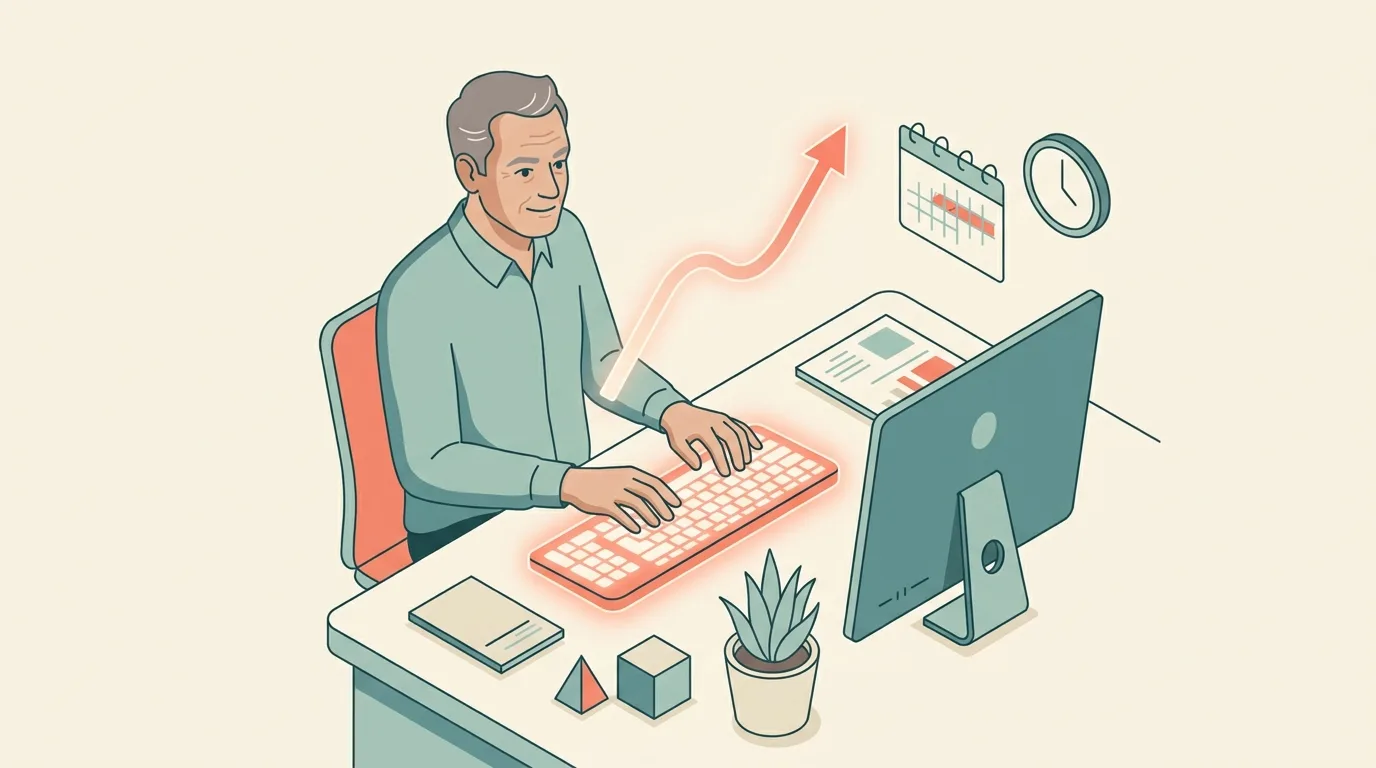 Is It Too Old to Learn Touch Typing at 40, 50, or 60?Is it too old to learn touch typing at 40, 50, or 60? A 10,613-person study shows speed does decline with age, but not the way most people assume. Here is the actual curve, and what to do about it starting today.
Bereit, ohne hinzusehen zu tippen?
Kostenlos, läuft im Browser, und die erste Lektion dauert zwei Minuten.
Kostenlos loslegen